
Tin

€15.47
Available, delivery time: 1-2 days
Product information "Tin"
Tin Electrolyte BMG‑097
Versatile tin plating solution for corrosion protection and surface finishing
Short Description
The Tin Electrolyte BMG‑097 is a ready‑to‑use plating solution for electroplating tin onto conductive metals. It produces a uniform, protective tin layer that enhances corrosion resistance, improves surface solderability, and can be polished to a bright finish.
This versatile tin plating solution is suitable for hobby, workshop, and professional applications — from cookware to high‑end electronics.
What is this tin electrolyte used for?
This tin electrolyte can be applied to:
-
Protect metal surfaces from corrosion and wear
-
Tin‑plate screws, fasteners, and components for improved durability
-
Improve solderability in electronics or plumbing without flux
-
Provide a decorative satin to polished surface finish
-
Serve as a surface finish on copper, nickel, palladium, cobalt, or thin gold layers for enhanced properties
The electrolyte is valued for its low toxicity finish and is even suitable for applications like cookware plating.
How does tin electroplating work? (simple explanation)
Tin electroplating uses electrical current to deposit tin from the electrolyte onto a metallic workpiece:
-
The workpiece must be cleaned and degreased before plating.
-
It is connected as the cathode (negative pole) in the plating circuit.
-
A suitable tin or graphite anode is used as the positive pole.
-
When the current flows, tin ions are reduced at the surface and form a tin coating.
This coating provides a uniform protective layer that is easy to polish and improves surface performance.
Advantages of Tin Electrolyte BMG‑097
-
Produces satin to semi‑matte tin finishes that can be polished to shine
-
Improves solderability without the need for flux
-
Suitable for use on a variety of substrates: copper, nickel, palladium, cobalt, thin gold layers
-
Air‑sensitive formulation allows excellent results when stored correctly
-
Easy to integrate into tank plating or brush/pen plating techniques
Technical Parameters
Below are the typical operating parameters and deposit properties for the tin electrolyte:
| Property | Typical Value / Range |
|---|---|
| Electrolyte type | Tin plating solution |
| pH value | approx. 3.6–4.0 |
| Temperature range | 14–30 °C |
| Operating voltage | from 3 V |
| Tin concentration | 22 g/L |
| Plating rate | ~ 3 µm/min at 4 V (graphite anode) |
| Maximum thickness | >1000 µm (1 mm) |
| Deposit appearance | Matte to satin, crystalline >20 µm |
| Deposit composition | 99.9 % tin (balance carbon) |
| Hardness | ~ 1.5 (Mohs) |
| Deposit density | ~ 7.289 g/cm³ |
| Health classification | Irritant (not transport dangerous) |
Practical Application Notes
Air Sensitivity:
The tin electrolyte is sensitive to oxygen. When not in use, keep the cap tightly closed and minimize air exposure in the bottle — e.g., by adding glass beads or storing in a sealed syringe — to prevent solution degradation.
Bath Filtration:
For tank plating, continuous filtration is recommended if anode bags are not used.
Polishing:
After plating, the tin deposit can be polished with suitable compounds (e.g., Ultra or Ultrafein from Betzmann Galvanik) to achieve a bright finish.
Safety Information
Tin electroplating solutions contain acidic components and tin salts and should be handled with appropriate safety measures:
-
Wear chemical‑resistant gloves, eye protection and protective clothing
-
Avoid contact with skin or eyes
-
Rinse thoroughly with water if contact occurs
-
Use only in well‑ventilated areas
-
Do not inhale vapors or aerosols
-
Keep out of reach of children
The product is classified as an irritant under the EU CLP regulation.
Scope of Delivery
-
Tin Electrolyte BMG‑097
-
Volume according to selection
Conclusion
The Tin Electrolyte BMG‑097 is a versatile and reliable tin plating solution that produces protective and functional tin coatings. Its range of applications — from corrosion protection to improved solderability and decorative finishes — makes it suitable for hobbyists and professionals alike. With correct handling and plating parameters, it delivers consistent, high‑quality results.
.gif?ts=1720611308)
Labelling according Regulation (EC) No 1272/2008
Pictogram Signal word Warning Hazard statement(s).
H316 Causes mild skin irritation.
H320 Causes eye irritation.
H335 May cause respiratory irritation.
P261 Avoid breathing dust/ fume/ gas/ mist/ vapours/spray.
P305 + P351 + P338 IF IN EYES: Rinse cautiously with water for several minutes. Remove contact lenses, if present and easy to do. Continue rinsing.
Similar Items

Anode pad / tampon / anode sleeve / fuzzy sleeve / replacement fabric pad puffy from Betzmann Galvanik. This puffy fabric pad / anode sleeve or also called tampon is absolutely recommended for all plating processes. Optimally suitable for all coatings and electrolytes. The coating of larger areas is also quite fast with this pad. The insertion hole is larger than the electrode and therefore it happens that the moist anode pad slips off. Therefore, fix the pad on the electrode with a small rubber band.

Graphite Electrode Ø 6 mm (BMG‑010) Short Description The Graphite Electrode Ø 6 mm (BMG‑010) is a durable, chemically inert electrode rod made from high‑density fine‑grain graphite. Designed for use as an anode or electrode in electroplating processes, it is ideal for bath, pen, and pad plating applications where a clean, metal‑free current supply is essential. Product Description This graphite electrode is manufactured from highly compressed fine‑grain graphite, which dissolves only slowly in electrolytes. Unlike metallic anodes, graphite does not shed contaminating metal particles, ensuring cleaner coatings and higher deposit quality. The 6 mm diameter rod, with an approximate length of 95 mm, fits standard plating fixtures, holders, and pen plating tools, making it easy to integrate into various electroplating setups Typical Applications Electroplating processes (e.g., silver, gold, copper, black nickel, chrome, white bronze) Pen, bath, and pad plating Activation and pre‑treatment steps Counter‑electrode or anode use in a wide range of electrolytes Situations where metal contamination must be avoided Key Benefits Chemically inert: prevents unwanted metal ion contamination in the plating bath. Versatile: compatible with most electroplating chemistries and techniques. Slow wear: dissolves gradually, extending service life. Affordable: cost‑effective solution for frequent use. Easy to use: fits common plating holders and pen plating tools. Material & Dimensions Material: High‑density fine‑grain graphite Diameter: 6 mm Length: approx. 95 mm (other lengths may be available) Practical Tips Ensure electrodes are clean and free of oils before use. Replace electrodes periodically as they slowly dissolve during electroplating. Graphite’s mild warming effect can help stabilize bath temperature during plating. Conclusion The Graphite Electrode Ø 6 mm is an effective and reliable anode/electrode for a wide range of electroplating applications. Its inert behavior, broad compatibility, and metal‑free current delivery make it a solid choice for hobbyists, workshops, labs, and professional plating operations.
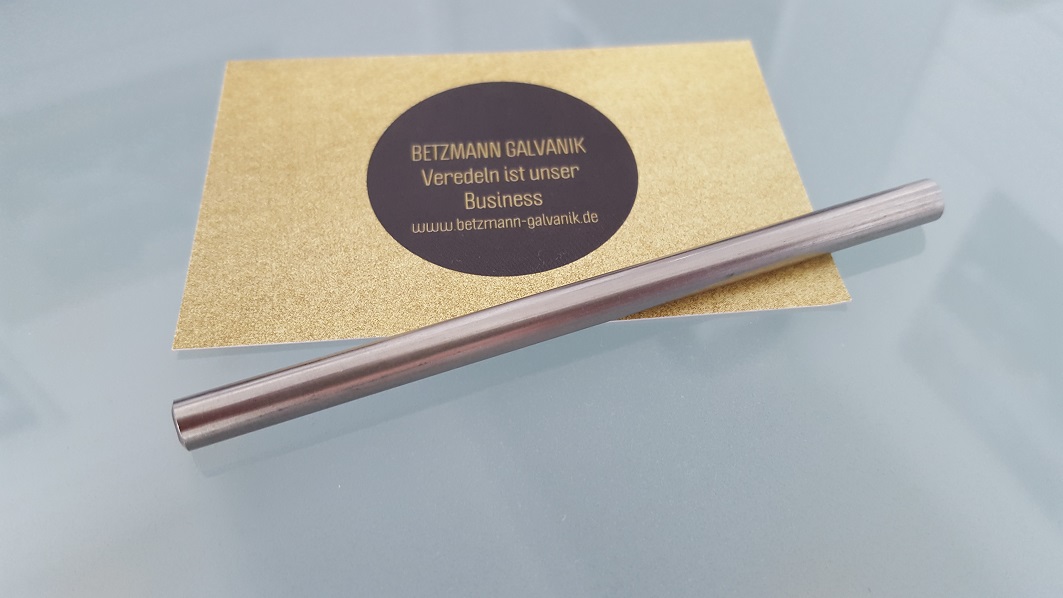
Stainless Steel Electrode Ø 6 mm (BMG-007) Short Description The Stainless Steel Electrode Ø 6 mm is a versatile plating electrode designed for a wide range of electroplating tasks, especially degassing, activation, dechroming and chrome plating. Suitable for pen, bath and pad electroplating, it delivers consistent current flow and durable performance in your plating setups. Product Description This electrode is made from corrosion-resistant stainless steel with a diameter of 6 mm and a length of approx. 9.5 cm, making it a compact and easy-to-handle tool for many galvanic applications. It is particularly effective for: Degreasing and activating metal surfaces prior to plating Dechroming or preparing surfaces for subsequent layers Chrome plating processes where robust anode performance is needed Pre-treatment and cleaning steps during electrochemical work It fits standard holders and electrode grips used in pen and tampon plating and provides reliable performance in repeated or continuous use. Key Benefits Durable stainless steel construction: Offers good chemical resistance and long service life. Broad compatibility: Well-suited for degreasing, activation and dechroming operations. Effective for chrome plating: Works particularly well in chromic electroplating applications. Standard size: Ø 6 mm fits most electrode handles and plating tools. Easy to use: Ergonomic size and reliable conductivity promote smooth workflows. Usage Tips Clean and degrease surfaces before using the electrode for best results. In plating processes such as gold or silver, consider using a graphite or platinum electrode instead, as stainless steel may contaminate some plating baths. For chrome plating, stainless steel may be used effectively, sometimes in combination with aluminium electrodes. Conclusion The Stainless Steel Electrode Ø 6 mm is a reliable, robust and versatile tool for a variety of electroplating and surface preparation tasks – especially degreasing, activation and chrome plating. Its solid construction and compatibility with standard plating systems make it a valuable addition to any workshop or lab.