
Chrome Stripper – Chrome Remover for Electrolytic Stripping | Pen, Tampon & Tank Plating

€6.90
Available, delivery time: 1-2 days
Product information "Chrome Stripper – Chrome Remover for Electrolytic Stripping | Pen, Tampon & Tank Plating"
Chrome Stripper – Chrome Remover for Electrolytic Stripping | Tank, Pen & Tampon Plating
Remove Electroplated Chrome Layers – Precisely, Efficiently and Professionally
The Chrome Stripper / Chrome Remover from Betzmann Galvanik has been specially developed for the electrolytic removal of electroplated chrome layers. By reversing the polarity, the chrome coating becomes anodic and is dissolved from the workpiece in a controlled manner.
The product is suitable for pen plating, tampon plating and tank plating, making it possible to remove chrome selectively from individual areas or completely from larger workpieces.
This process is particularly useful for typical nickel-chrome coating systems. As the chrome layer is removed, the underlying nickel layer becomes visible, allowing the stripping process to be visually monitored.
Your Advantages at a Glance
Effective electrolytic chrome stripping
Removes electroplated chrome layers
Suitable for tank plating, pen plating and tampon plating
Suitable for selective or complete chrome removal
Controlled stripping through adjustment of time and electrical parameters
Visual control of the transition from chrome to nickel
Ideal for repairs, restoration and recoating
No mechanical grinding of the chrome layer required
Suitable for professional electroplating applications
How Does Electrolytic Chrome Stripping Work?
During normal electroplating, the workpiece is connected as the cathode (negative pole) and metal is deposited onto its surface.
During electrolytic stripping, the polarity is reversed:
Workpiece = Positive pole / Anode
Electrode = Negative pole / Cathode
The chrome coating is therefore anodically dissolved from the surface of the workpiece.
Correct polarity is essential for the stripping process.
Easy rule to remember:
For plating: Workpiece = Negative
For stripping: Workpiece = Positive
Chrome Removal with Pen or Tampon Plating
Pen plating and tampon plating are ideal when chrome needs to be removed only from specific areas of a workpiece.
This is particularly useful for repairs, selective stripping and complex components.
Procedure:
Thoroughly clean and degrease the workpiece.
Connect the workpiece to the positive pole of the DC power supply.
Connect the suitable electrode to the negative pole.
Apply the chrome stripper through the felt, pad or tampon.
Start with a low voltage.
Move the electrode evenly across the area to be stripped.
Monitor the stripping process.
Once the chrome layer has been removed, rinse the workpiece thoroughly.
As a practical starting point, approximately 5 volts can be used for pen plating and adjusted according to the application.
Chrome Stripping in a Tank / Immersion Process
For larger workpieces or complete chrome removal, the Chrome Stripper can also be used in a tank.
The entire workpiece is immersed in the electrolyte and treated electrolytically.
The polarity remains:
Workpiece → Positive pole (Anode)
Counter electrode → Negative pole (Cathode)
The actual process parameters should be adjusted according to the workpiece size, chrome layer, electrode surface area and desired stripping rate.
For larger surfaces, tank plating provides the advantage of a more uniform treatment.
Selective Chrome Stripping
One of the major advantages of the electrolytic process is the ability to remove chrome only from selected areas.
This is particularly useful for:
Repair work
Reworking electroplated coatings
Partial chrome removal
Restoration
Preparation for recoating
Complex components
Pen plating or tampon plating allows even difficult-to-access areas to be treated precisely.
When Should Chrome Be Removed?
The Chrome Stripper is particularly useful when an existing chrome layer:
Is damaged
Has scratches
Has become uneven
Needs to be removed before recoating
Needs to be renewed during restoration
Should only be removed from selected areas
After the chrome has been removed, the underlying nickel layer may become visible and, where technically suitable, can serve as the basis for further processing.
Process Control
For clean and controlled results, the stripping process should be carefully monitored.
Important factors include:
Current / current density
Treatment time
Electrode surface area
Distance between workpiece and counter electrode
Thickness of the existing chrome layer
Uniform movement during pen or tampon plating
When working selectively, it is recommended to start with a low power setting and continuously monitor the stripping progress.
Do not treat the workpiece unnecessarily long. Stop the process once the chrome layer has been removed.
Typical Applications
The Chrome Stripper is suitable for applications including:
Automotive parts
Classic car restoration
Motorcycle parts
Jewellery
Decorative metal components
Fittings and hardware
Model making
Precision engineering
Electroplating repair work
Industrial reworking
Preparation for renewed electroplating
Suitable for Different Electroplating Processes
The Chrome Stripper can be used with:
Pen Plating
Ideal for localized and selective chrome removal.
Tampon Plating
Suitable for larger localized areas and complex surfaces.
Tank Plating
Ideal for complete chrome removal from larger workpieces or components.
Important Information About the Base Material
The stripping process should always be adapted to the specific coating system and base material.
With a typical decorative coating system:
Base material → Copper → Nickel → Chrome
the outer chrome layer is removed first during the stripping process. The underlying nickel layer then becomes visible.
For unknown materials or coating systems, we recommend testing the process on a suitable inconspicuous area first.
Application – Quick Guide
1. Clean and degrease
Thoroughly remove oil, grease, dirt and other residues from the workpiece.
2. Connect the correct polarity
Connect the workpiece to positive / anode.
Connect the counter electrode to negative / cathode.
3. Apply the electrolyte
For pen or tampon plating, apply the electrolyte through the pad, felt or tampon.
4. Start with a low setting
For pen plating, approximately 5 volts can be used as a starting point.
5. Monitor the process
Observe the chrome layer and move the electrode evenly.
6. Rinse after stripping
Thoroughly rinse the workpiece with water.
7. Continue processing
If the workpiece is to be recoated, activate the surface appropriately and continue with the next electroplating step without unnecessary delay.
Safety Information
The Chrome Stripper is a strongly alkaline and corrosive product.
Always observe appropriate safety precautions:
Wear chemical-resistant protective gloves
Wear safety goggles or suitable face protection
Wear appropriate protective clothing
Do not inhale vapours or aerosols
Work only in well-ventilated areas
Avoid contact with skin and eyes
Follow the Safety Data Sheet and product labelling
Danger: Causes severe skin burns and serious eye damage.
Store and dispose of the product according to applicable regulations.
Technical Product Information
Product:
Chrome Stripper / Chrome Remover
Process:
Electrolytic chrome stripping / Reverse Plating
Suitable for:
Tank plating
Pen plating
Tampon plating
Selective chrome stripping
Complete chrome stripping
Polarity during stripping:
Workpiece = Positive pole / Anode
Counter electrode = Negative pole / Cathode
Starting value for pen plating:
Approx. 5 volts
The optimum settings depend on the workpiece, chrome layer, electrode surface area and process requirements.
Available sizes:
250 ml, 500 ml, 1 litre, 2 litres and 5 litres
Product number: BMG-062.3
Chrome Stripper from Betzmann Galvanik
The Chrome Stripper / Chrome Remover provides a flexible and controlled method for the electrolytic removal of electroplated chrome layers.
Whether selectively with pen plating, over larger areas with tampon plating, or completely in a tank process – the Chrome Stripper is a practical solution for removing chrome coatings and preparing components for further electroplating processes.

CLP classification: • Skin Corr. 1B
H314 Label elements:
• GHS05 (corrosive effect)
• Signal word: DANGER
• H and P statements
⚠️ Danger
• Signal word: DANGER
Hazard symbols: ☣️ GHS05 (corrosive effect)
• Hazard statements (H statements):
• H314: Causes severe skin burns and eye damage.
• Precautionary statements (P statements):
• P260: Do not breathe aerosol or mist.
• P280: Wear protective gloves/protective clothing/eye protection/face protection.
• P303+P361+P353: IF ON SKIN (or hair): Remove/Take off immediately all contaminated clothing. Rinse skin with water/shower.
P305+P351+P338: IF IN EYES: Rinse cautiously with water for several minutes. Remove contact lenses, if present and easy to do. Continue rinsing.
P301+P330+P331: IF SWALLOWED: Rinse mouth. Do NOT induce vomiting.
P310: Immediately call a POISON CENTER or doctor/physician.
P405: Store locked up. P501: Dispose of contents/container to hazardous waste collection point.
• Other hazards: Does not contain any PBT/vPvB substances.
Ähnliche Artikel

Nickel Remover / Nickel Stripper – Chemically Remove Nickel Plating with Professional ResultsProfessional Nickel Stripper for Electroplating, Jewellery, Restoration and Industrial ApplicationsThe Nickel Remover from Betzmann Galvanik is a highly effective, ready-to-use chemical solution designed for the selective removal of electroplated nickel coatings and electroless nickel (Ni-P) deposits. The Nickel Stripper works without electricity, allowing nickel coatings to be removed safely, efficiently and with minimal attack on the base material.Whether you are working in electroplating, jewellery manufacturing, restoration, precision engineering or industrial metal finishing, this professional nickel stripper provides a fast, reliable and economical solution for removing worn, damaged or incorrectly applied nickel coatings prior to replating.Your Benefits at a GlanceChemically removes nickel without electricityReady to use – no mixing requiredRemoves electroplated nickel coatingsRemoves electroless nickel (Nickel-Phosphorus / EN)High stripping rate of up to 50 microns per hourHigh capacity – up to 40 g of nickel per litreGentle on copper, brass, steel and silverEasy and safe to useLow odourReusable for long service lifeNo grinding or abrasive blasting requiredProfessional quality from Betzmann GalvanikFast, Controlled and Reliable Nickel RemovalNickel coatings often need to be removed before replating, restoration or repair work. Mechanical methods such as grinding or blasting are time-consuming and may damage valuable base materials.The Nickel Stripper selectively dissolves nickel coatings while leaving the substrate largely unaffected. This allows workpieces to be replated immediately after stripping and avoids the production of hazardous nickel dust associated with mechanical removal methods.Typical ApplicationsIdeal for:Electroplating workshopsJewellery manufacturingJewellery repairWatchmakingRestorationClassic car restorationPrecision engineeringModel makingTool makingMechanical engineeringIndustrial metal finishingLaboratoriesReworking defective electroplated partsSuitable MaterialsSuitable for use on:CopperBrassSteelSilverEffectively removes:Electroplated nickelElectroless nickel (Nickel-Phosphorus / EN)For unknown alloys, a preliminary compatibility test is always recommended.Easy ApplicationThoroughly clean and degrease the workpiece.Pour the Nickel Stripper into a suitable polypropylene (PP), borosilicate glass, ceramic or enamel container.Heat the solution to 50–65 °C for optimum stripping performance.Completely immerse the workpiece.Agitate the workpiece gently during the process.Rinse thoroughly with clean water after stripping.Replate or continue processing immediately.Gentle agitation improves stripping performance. Thick nickel coatings may require multiple stripping cycles.Technical DataProcess: Chemical, immersionPower supply required: NoOperating temperature: 50–65 °CStripping rate: Up to 50 µm/hourCapacity: Approximately 40 g nickel per litreReusableReady-to-use solutionWhy Choose Betzmann Galvanik Nickel Stripper?Compared with mechanical stripping or aggressive removal methods, the Betzmann Galvanik Nickel Stripper offers significant advantages:Gentle on the base materialUniform nickel removalFully controllable stripping processCost-effective operationLong bath lifeReusable solutionNo electrical equipment requiredProfessional results for hobbyists and industry alikeIt is the ideal solution for electroplating companies, jewellery manufacturers, restoration workshops and industrial surface finishing.Safety InformationAlways use the Nickel Stripper in accordance with applicable safety regulations.Wear protective glovesWear safety gogglesUse only in well-ventilated areasAvoid skin and eye contactKeep out of reach of childrenNickel-containing waste solutions must be disposed of in accordance with local environmental regulations. Always follow the Safety Data Sheet (SDS) and product label instructions.Quality from Betzmann GalvanikThe Nickel Remover / Nickel Stripper from Betzmann Galvanik has been developed for the professional, safe and efficient removal of nickel coatings. Its high stripping performance, ease of use and excellent material compatibility make it the perfect solution for electroplating, jewellery production, restoration and industrial metal finishing.
Content: 0.25 Liter (€100.00 / 1 Liter)
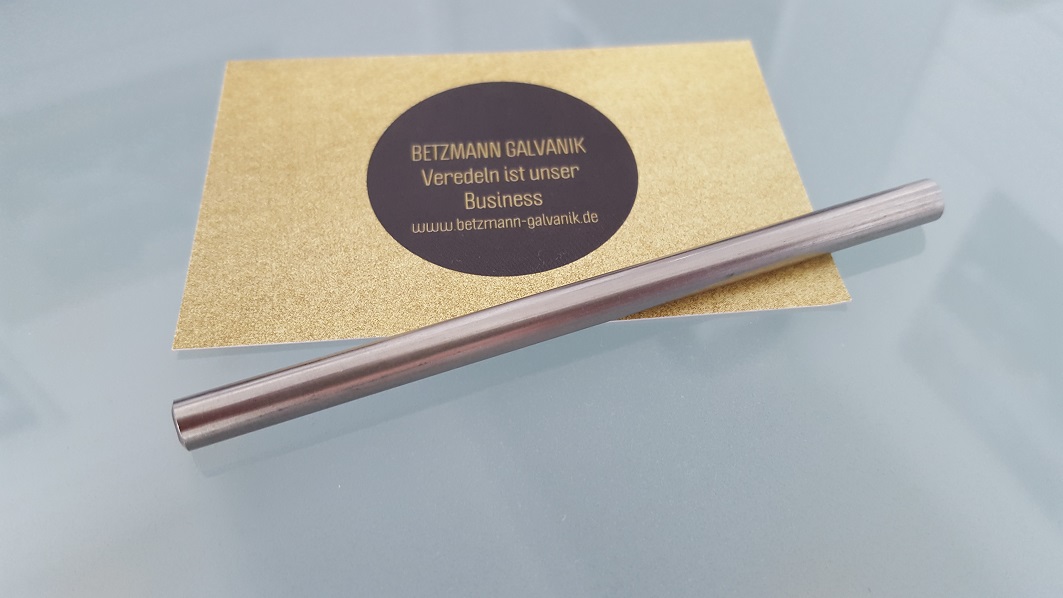
Stainless Steel Electrode Ø 6 mm – Universal Electrode for Activating, Degreasing, Dechroming and Chromium PlatingDurable Stainless Steel Electrode for Professional Tank, Pen and Brush PlatingThe Stainless Steel Electrode Ø 6 mm is manufactured from high-quality, corrosion-resistant stainless steel and has been specially designed for a wide range of electroplating applications. It is ideal for electrolytic degreasing, surface activation, dechroming and chromium plating, providing reliable current transfer in tank plating, pen plating and brush (tampon) plating.Its excellent chemical resistance and mechanical strength ensure a long service life, making it the perfect choice for workshops, laboratories and industrial applications.Your AdvantagesManufactured from high-quality corrosion-resistant stainless steelRobust and durable constructionExcellent electrical conductivityIdeal for electrolytic degreasing and surface activationPerfect for dechromingIdeal for chromium platingSuitable for tank plating, pen plating and brush platingFits standard 6 mm electrode holdersEasy to useProfessional quality from Betzmann GalvanikWhy Use a Stainless Steel Electrode?Stainless steel electrodes are primarily used for pretreatment and cleaning processes. They offer excellent resistance to many electrolytes while providing reliable electrical conductivity with minimal wear.They are particularly suitable for:Electrolytic degreasingSurface activationDechromingChromium platingCleaning processes before electroplatingTypical ApplicationsIdeal for:Electrolytic degreasingSurface activationDechromingChromium platingPretreatment of metal componentsTank platingPen platingBrush (tampon) platingWorkshopsLaboratoriesIndustrial applicationsRestorationModel makingMaterial PropertiesThe electrode is manufactured from high-quality stainless steel and offers:Excellent corrosion resistanceGood electrical conductivityHigh mechanical strengthLong service lifeVersatile applicationsApplication InstructionsBefore use:Thoroughly clean the workpieceRemove grease and contaminationUse a suitable electrolyteFollow the recommended voltage and current settingsImportant Note:For precious metal plating such as gold, silver, palladium or platinum, we recommend using a graphite or platinum electrode, as these do not contaminate the electrolyte with metal ions. Stainless steel electrodes are primarily intended for activation, cleaning, dechroming and chromium plating applications.Technical SpecificationsMaterial: Corrosion-resistant stainless steelDiameter: 6 mmLength: approx. 95 mmExcellent chemical resistanceSuitable for standard electrode holdersPackage Contents1 × Stainless Steel Electrode Ø 6 mmQuality from Betzmann GalvanikBetzmann Galvanik supplies high-quality electrodes and professional accessories for demanding electroplating applications. The Stainless Steel Electrode Ø 6 mm offers outstanding durability, excellent chemical resistance and versatile performance, making it the ideal choice for degreasing, activation, dechroming and chromium plating in hobby, workshop and industrial environments.

Anode Fabric Pad Sleeve Fluffy BMG-015 – Uniform Coating & Maximum Control The Anode Fabric Pad Fluffy BMG-015 is a specially designed accessory for pen plating and tampon electroplating, ensuring consistent electrolyte distribution and controlled coating processes. Thanks to its fluffy, high-volume structure, the pad absorbs electrolyte efficiently and releases it evenly and continuously onto the surface. This results in clean, uniform and high-quality metal coatings, even in demanding applications. Key Benefits at a Glance Excellent electrolyte absorption and release Uniform liquid and current distribution Ideal for precise and controlled plating Suitable for: Pen plating Tampon plating Reduces streaking and uneven deposits Flexible and easy to replace Applications Selective metal plating Repair and touch-up work Fine detail applications Jewelry finishing Technical surface treatments Technical Parameters Product Type: Anode fabric pad (fluffy) Item Number: BMG-015 Material: High-absorbency textile fabric Structure: Fluffy / high-volume Function: Electrolyte carrier for anode applications Application Areas: Pen plating Tampon plating Electrolyte Absorption: Very high Electrolyte Release: Even and controlled Current Distribution: Supports uniform deposition Reusability: Limited (depending on application) Replacement: Quick and easy Application – Step by Step 1. Preparation Soak the fabric pad with the appropriate electrolyte Allow excess liquid to drip off slightly Attach to the anode or plating pen 2. Pen Plating Application Move the pad evenly across the surface Maintain consistent contact Control voltage and movement Ensures precise and clean results 3. Tampon Plating Application Use the pad as an electrolyte carrier Apply even pressure Maintain continuous motion Ideal for selective plating applications Pro Tips for Best Results Replace pad regularly for consistent quality Avoid over-saturation → better control Uniform movement prevents streaks Always use clean electrolyte Conclusion The Anode Fabric Pad Fluffy BMG-015 is an essential accessory for achieving precise, uniform and high-quality results in pen and tampon electroplating. It ensures optimal control, clean finishes and significantly improved coating performance.

S Stainless Steel & Nickel Activator – Professional Deplating / Pickling Solution for Optimal Electroplating AdhesionSurface Activation for Stainless Steel, Nickel and Passive Metal SurfacesThe Stainless Steel & Nickel Activator from Betzmann Galvanik is a professional pickling and activation solution designed to prepare stainless steel, nickel and passive metal surfaces before electroplating.High-alloy metals such as stainless steel and nickel naturally form a very stable oxide and passive layer on their surface. Although this layer provides excellent corrosion resistance, it can significantly reduce the adhesion of subsequent electroplated coatings and may cause problems such as poor adhesion, peeling or uneven deposits.The activator removes these interfering passive layers and creates a chemically active metal surface that is optimally prepared for subsequent electroplating processes.Suitable for applications such as:Nickel platingGold platingSilver platingChrome platingOther electroplating processesYour Advantages at a Glance✔ Removes oxide and passive layers✔ Activates stainless steel and nickel for improved adhesion✔ Prevents adhesion problems during electroplating✔ Suitable for non-electrolytic and electrolytic applications✔ Ideal for pen plating, tampon plating and tank plating✔ Fast and easy application✔ Improves the quality and durability of electroplated coatings✔ Professional surface preparation for high-quality resultsWhy Is an Activator Necessary?Metals such as stainless steel and nickel can quickly form a passive layer when exposed to air.This layer is an excellent protection against corrosion, but it can prevent a strong bond between the base material and the following electroplated coating.Without proper activation, problems may occur:Poor coating adhesionPeeling or flaking of the depositSpottingUneven coatingsPremature coating failureThe activator creates a freshly activated surface and provides the ideal foundation for the next electroplating step.Application Without Electricity (Immersion Process)The activation can easily be carried out without a power supply.Procedure:Thoroughly degrease the workpiece.Immerse the workpiece in the activator.Activate for approx. 30–60 seconds.Rinse thoroughly with water.Continue directly with electroplating.For improved performance, the activator can be heated.Recommended temperature:Usable at room temperatureHeating to approx. 40 °C improves the activation performanceThe increased temperature accelerates the removal of oxide and passive layers and provides a more effective surface activation.Application With Electricity (Electrolytic Activation)For especially reliable results, the activator can also be used electrolytically.This method is particularly suitable for:Stainless steelPassive nickel surfacesDifficult-to-activate materialsProcedure:Thoroughly degrease the workpiece.Connect the workpiece to the negative pole.Connect a stainless steel or suitable electrode to the positive pole.Treat the surface with the activator.Rinse thoroughly and proceed immediately with electroplating.Recommended values:Voltage: approx. 4 voltsElectrode: stainless steel or graphiteActivation time: approx. 30–60 secondsElectrolytic activation supports the removal of passive layers and creates a highly active surface for excellent coating adhesion.Suitable MaterialsThe activator is especially suitable for:Stainless steelNickelPassive nickel surfacesSteelCopperBrassVarious metal alloysFor unknown materials, we recommend testing on an inconspicuous area before use.Processing After ActivationAfter activation, the workpiece should be electroplated as soon as possible.Recommended process:Activate → Rinse → Electroplate immediatelyActivated metal surfaces can change again when exposed to air, so quick further processing ensures the best results.Typical ApplicationsIdeal for:Jewellery electroplatingStainless steel coatingRepair platingIndustrial applicationsPrecision engineeringRestoration workMechanical engineeringMetal finishingGold plating stainless steelNickel plating difficult materialsTechnical InformationProduct type:Activator / Pickling solutionApplication:Surface preparation before electroplatingProcesses:Non-electrolytic activation (immersion process)Electrolytic activation (pen/tampon process)Activation time:Approx. 30–60 secondsTemperature:Room temperature possibleHeating up to approx. 40 °C improves performanceVoltage for electrolytic application:Approx. 4 voltsSuitable electrodes:Stainless steelGraphiteSafety InformationWear safety glasses and suitable protective gloves.Avoid contact with skin and eyes.Use only in well-ventilated areas.Observe the safety data sheet.Do not inhale vapours or aerosols.Quality from Betzmann GalvanikThe Stainless Steel & Nickel Activator is an essential step for professional electroplating applications.By reliably removing oxide and passive layers, it creates an optimally prepared surface for strongly adherent, uniform and durable metal coatings.SEO Shopware 6Product Title:Stainless Steel & Nickel Activator – Pickling Solution for Electroplating PreparationSEO URL:stainless-steel-nickel-activator-pickling-solutionSEO Title:Stainless Steel Nickel Activator | Pickling Solution for ElectroplatingMeta Description:Professional stainless steel and nickel activator for electroplating preparation. Removes oxide and passive layers for excellent adhesion during gold plating, nickel plating, silver plating and chrome plating.Keywords:stainless steel activator, nickel activator, pickling solution electroplating, stainless steel electroplating preparation, activate stainless steel, activate nickel, remove passive layer, remove oxide layer, electroplating preparation, pen plating activator, tampon plating activator, gold plating stainless steelLong-Tail Keywords:stainless steel activator before gold plating, nickel pickling solution for electroplating, improve stainless steel plating adhesion, remove stainless steel passive layer, electrolytic stainless steel activation, immersion activator for electroplating
Content: 0.25 Liter (€27.20 / 1 Liter)